
TL;DR
Detecting MAP violations requires consistent monitoring of advertised prices across retailers and marketplaces, clear policy thresholds, and structured visibility into seller behavior. Price monitoring services help brands identify violations quickly, document recurring issues, and enforce pricing policies with confidence.
Key takeaways:
• MAP enforcement begins with consistent advertised price monitoring
• Manual checks cannot scale across retailers and sellers
• Clear policy thresholds are required to identify true violations
• Marketplace seller variation increases enforcement complexity
• Structured monitoring supports consistent, defensible enforcement
What is a MAP violation?
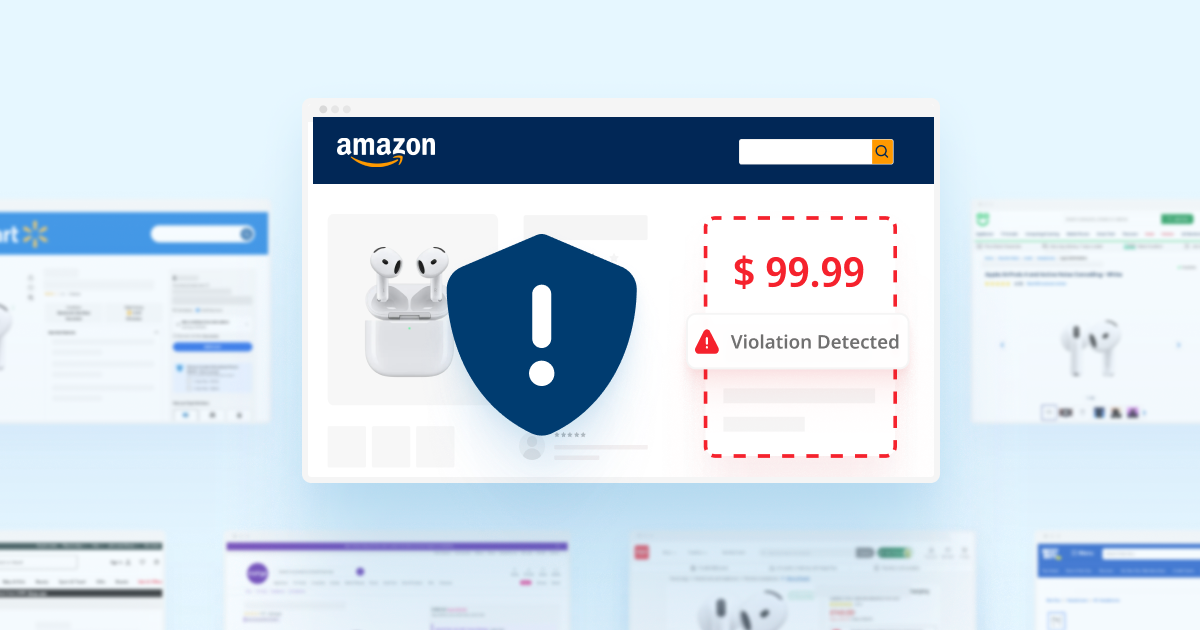
A Minimum Advertised Price violation occurs when a reseller or marketplace seller advertises a product below the price threshold defined in a brand’s MAP policy. MAP policies are designed to maintain consistent advertised pricing, protect brand value, and promote fair competition among resellers.
A violation is not about a one-time discount alone. It is about whether advertised pricing falls below established policy in a way that requires action. Clear definitions and consistent thresholds are essential for identifying violations accurately.
Why is manual MAP monitoring unreliable?
Some brands attempt to monitor MAP compliance by manually checking retailer sites or scanning marketplaces periodically. This approach may work for a small assortment but quickly becomes unmanageable as product counts, sellers, and channels expand.
Manual monitoring:
- Captures only a moment in time
- Can miss violations between checks
- Struggles to track multiple sellers across marketplaces
- Lacks structured documentation
Without consistent monitoring, enforcement becomes reactive and inconsistent.
How do price monitoring services detect MAP violations?
Price monitoring services collect advertised prices across defined retailers and marketplaces on an ongoing basis. Brands establish MAP thresholds for their products, and advertised prices are compared against those thresholds.
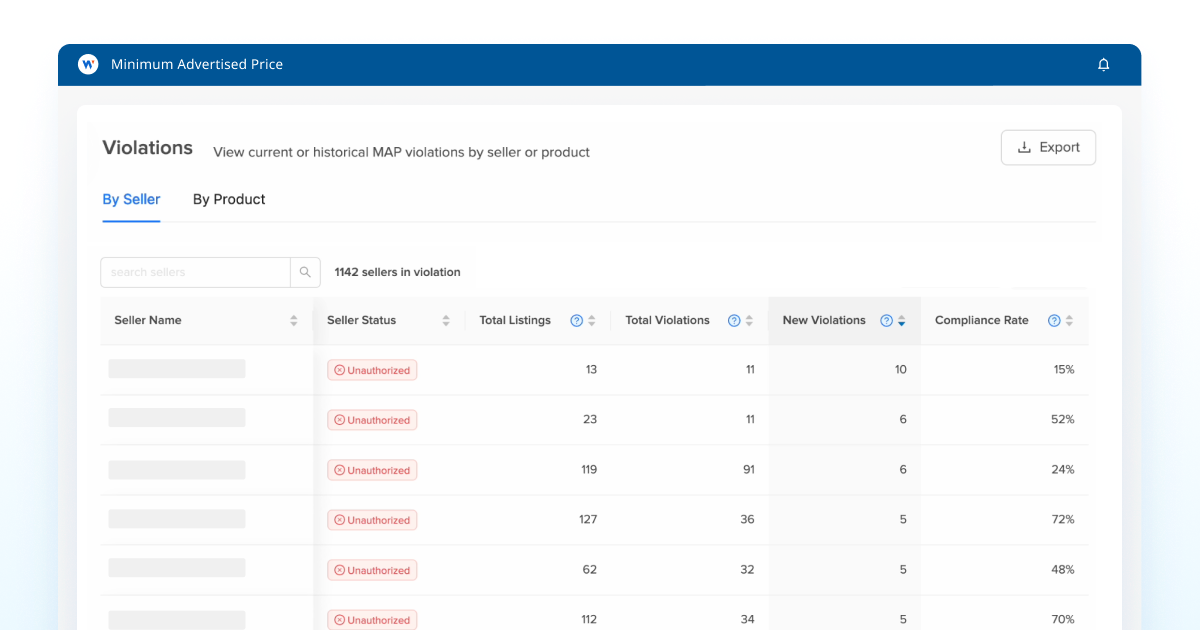
With Wiser Solutions MAP Intelligence, brands can monitor advertised pricing at the SKU and seller level, identify instances where prices fall below policy, and maintain structured visibility into recurring violators.
This approach shifts enforcement from sporadic checks to systematic monitoring. Violations can be reviewed, documented, and addressed consistently.
How do marketplaces make MAP enforcement more complex?
Marketplaces introduce multiple sellers, dynamic pricing, and fulfillment variations. A single product may appear at different advertised prices depending on the seller.
Price monitoring services help brands:
- See seller-level advertised pricing
- Distinguish between compliant and non-compliant sellers
- Identify patterns of repeated violations
Without seller-level visibility, it is difficult to determine whether a violation is isolated or part of a broader marketplace issue.
How often should MAP violations be monitored?
MAP monitoring should be ongoing and automated. Markets move quickly, and advertised prices can shift within hours or days.
Most brands benefit from maintaining consistent, scheduled monitoring that provides timely awareness of violations without relying on manual spot checks. Ongoing visibility allows brands to respond quickly while maintaining structured enforcement processes.
What is the best tool for detecting MAP violations?
The most effective way to detect MAP violations at scale is through a MAP monitoring platform that tracks advertised pricing across retailers and marketplaces in a structured, repeatable way.
Wiser Solutions MAP Intelligence enables brands to monitor advertised prices against defined policy thresholds, identify violations at the seller level, and maintain documented visibility across channels.
By replacing manual monitoring with structured data, brands can enforce MAP policies consistently, protect pricing integrity, and reduce marketplace disruption.
If you want to understand how structured MAP monitoring works in practice, reach out to Wiser to learn how MAP Intelligence supports consistent, defensible pricing enforcement across retailers and marketplaces.
FAQs
What is the best way to detect MAP violations?
The most effective approach is to use a MAP monitoring platform that continuously tracks advertised prices across retailers and marketplaces and compares them against defined policy thresholds.
Can I enforce MAP manually?
Manual enforcement may work temporarily for small assortments, but it becomes unreliable as product counts, sellers, and channels grow. Automated monitoring provides consistency and scale.
How do marketplaces affect MAP enforcement?
Marketplaces often include multiple sellers offering the same product at varying prices. Seller-level visibility is necessary to identify which sellers are compliant and which are violating policy.
How often should MAP compliance be reviewed?
Continuous monitoring with regular review ensures violations are identified promptly and addressed consistently.