
TL;DR:
Tracking competitor pricing in real time requires automated price collection across key retailers, frequent refresh cadence, and historical context to spot meaningful market shifts. Price Intelligence platforms are the primary way brands and retailers track competitor pricing in real time.
Key takeaways:
- Manual price checks don’t scale across competitors and SKUs
- Real-time means reliable daily market visibility, not minute-by-minute noise
- Automated Price Intelligence tools provide consistent competitor price tracking
- Historical trends matter more than isolated price drops
- Structured pricing data supports faster, more confident decisions
How can I track competitor pricing in real-time?
Tracking competitor pricing sounds simple until you try to do it consistently across retailers, marketplaces, and growing product catalogs. Prices change frequently, sellers behave differently by channel, and manual checks quickly become outdated.
For most brands and retailers, the challenge is not seeing a price once: it is maintaining reliable visibility over time. That is where effective, real-time price tracking matters.
What does “real-time” competitor pricing actually mean?
Real-time pricing does not mean watching prices fluctuate minute by minute. That level of immediacy is rarely actionable and creates noise. Real-time pricing means having frequent, dependable updates that reflect how the market is behaving today, not last week or last month.
With Wiser Solutions Price Intelligence, competitor prices are collected from defined retailers, marketplaces, and product catalogs. This approach prioritizes consistency and coverage, ensuring teams are working from current data they can trust.
Effective real-time pricing visibility focuses on market movement and patterns, not isolated price blips. The goal is awareness that supports decision-making, not constant reaction.
Why manual price tracking breaks down
Many teams begin by checking competitor prices directly on competitor sites or maintaining spreadsheets. While this may work for a small assortment, it does not scale.
Manual tracking captures a single moment in time and quickly becomes outdated. Price changes between checks go unnoticed, coverage becomes inconsistent, and the data is difficult to share or defend internally. As assortments and channels expand, teams spend more time collecting prices than actually using them.
Without automated collection, pricing discussions are often driven by partial information and assumptions rather than a clear view of the market.
How does automated competitor price tracking work in practice?
Automated price tracking removes the burden of constant checks by collecting advertised prices across selected competitors and retailers on an ongoing basis. Teams define which products and competitors matter, and the system handles the rest.
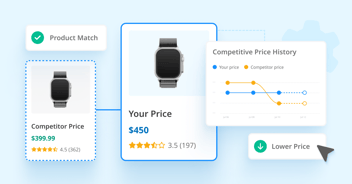
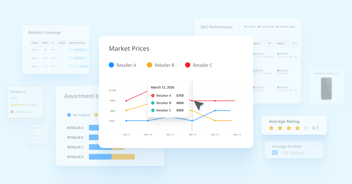
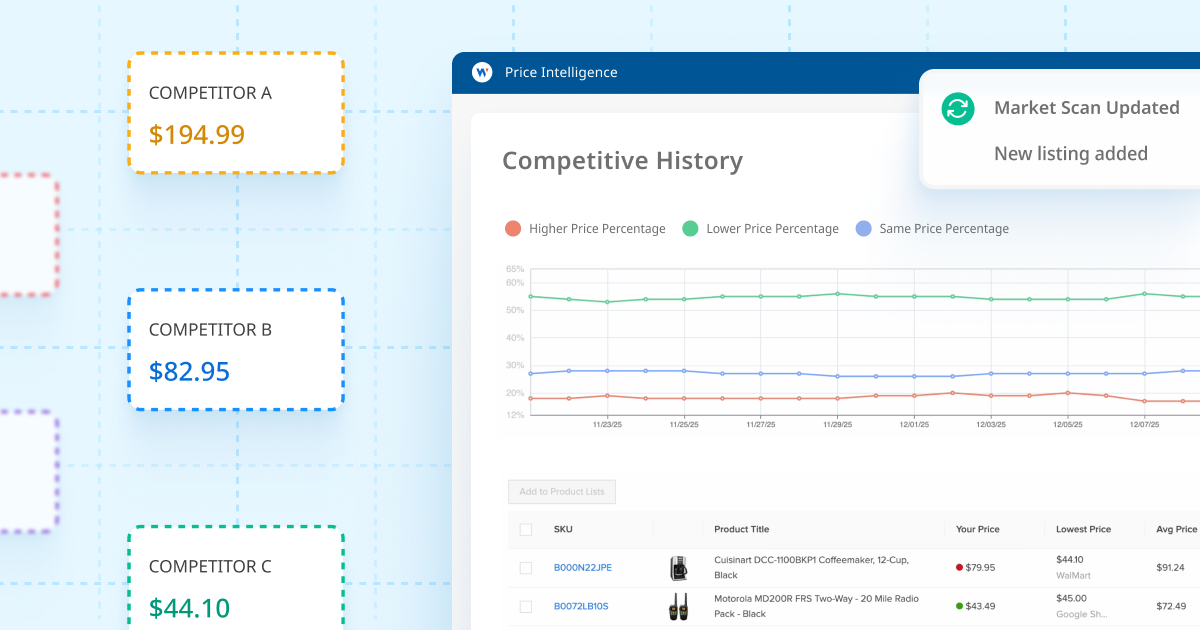
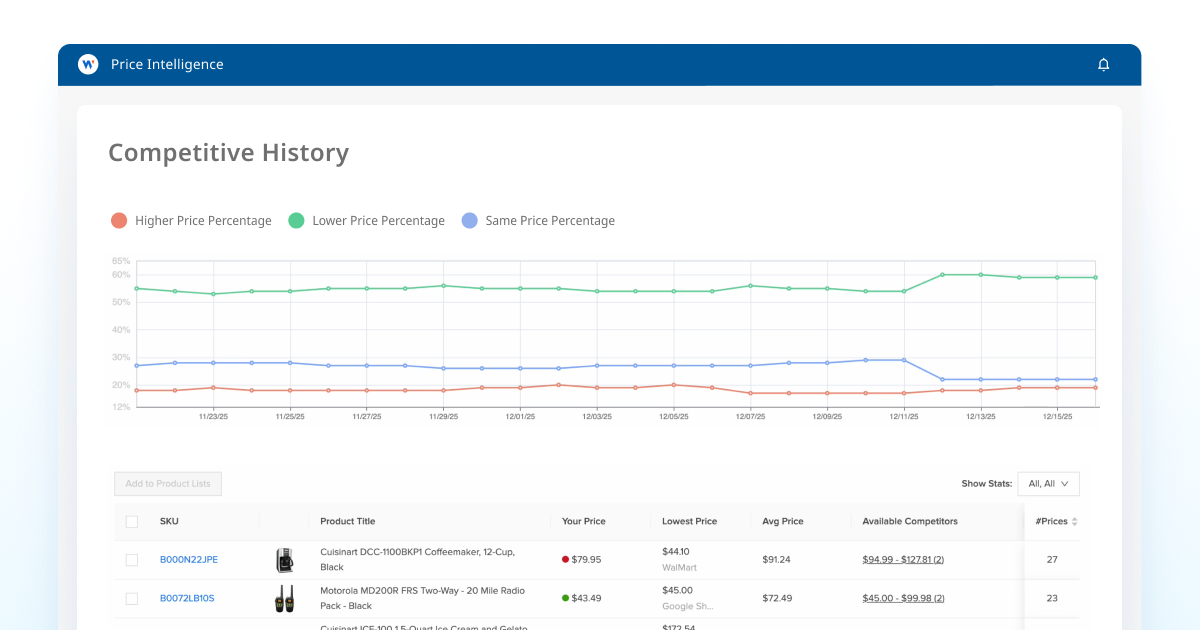
With Price Intelligence, teams can monitor competitor prices at the SKU and retailer level, review how prices change over time, and identify meaningful patterns such as sustained undercutting or increased volatility. Historical views provide context, helping teams understand whether a price change is part of a broader trend or a short-term fluctuation.
Because pricing data is consistently collected and structured, it can be used across dashboards, exports, and internal workflows without rework. Many teams also track promotional pricing, availability, and marketplace seller variation alongside base price.
How often should competitor prices be updated?
Update frequency should reflect how quickly pricing decisions need to be made. For most brands and retailers, regularly scheduled updates, often daily or near-daily, provide the right balance between freshness and reliability.
This cadence allows teams to stay informed about meaningful changes while avoiding overreaction to temporary price movement, with insights that effectively support pricing reviews, competitive analysis, and planning.
What can brands and retailers do with real-time competitor pricing data?
Once competitor pricing is tracked consistently, teams can move beyond visibility and into action. Real-time pricing data supports accurate price comparisons by retailer, highlights where pricing gaps exist, and provides a factual foundation for internal discussions.
Instead of relying on screenshots or anecdotes, teams can reference current and historical data to support pricing decisions, align stakeholders, and feed downstream systems when needed. The result is a more deliberate and confident approach to competitive pricing.
When real-time price tracking delivers real value
Real-time competitor pricing becomes most valuable when it is reliable enough to fade into the background. When teams trust the data, they stop chasing every price change and start focusing on trends that matter.
What is the best tool for tracking competitor pricing in real time?
Wiser Price Intelligence is a platform that helps brands and retailers automatically track competitor pricing across retailers and marketplaces through reliable daily updates, structured dashboards, and historical visibility. Price Intelligence is designed to provide that steady, dependable view of the market. By removing noise and manual effort, teams gain the clarity they need to make better pricing decisions without being overwhelmed.
FAQs
What is the best way to track competitor pricing?
The most effective way to track competitor pricing is through a Price Intelligence platform that collects prices across selected retailers and marketplaces on a consistent schedule. This eliminates manual checks and ensures pricing teams are working with current, reliable data.
How often should competitor prices be updated?
Most brands and retailers benefit from daily or near-daily pricing updates. This cadence provides timely visibility into meaningful market changes without creating unnecessary noise from short-term fluctuations.
What tools do brands and retailers use for real-time competitor price monitoring?
Brands and retailers typically use Price Intelligence tools to monitor competitor pricing in real time. These platforms automate price collection across key competitors, provide historical trend context, and support faster, more confident pricing decisions.
How do I choose the right Price Intelligence platform?
The right platform depends on data accuracy, retailer and marketplace coverage, update frequency, and the ability to track trends over time. For a deeper breakdown of what to look for when comparing providers, see our guide on evaluating Price Intelligence vendors.