Why It Matters
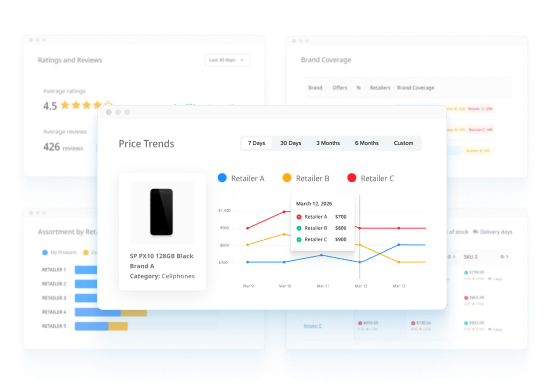
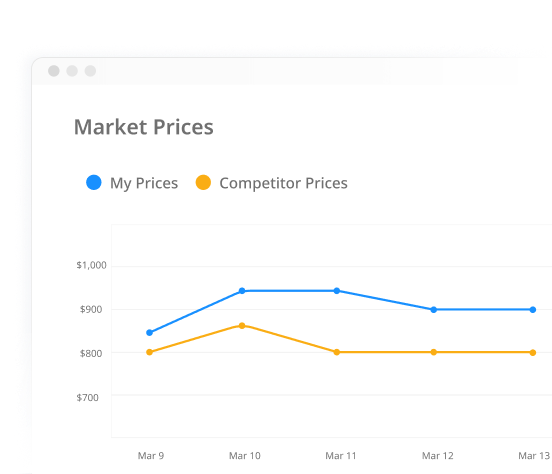
Sustained undercutting shows a deliberate strategy: capturing price-sensitive shoppers, positioning for higher-volume velocity, or pressuring your margin position at key retailers. Left unchecked, it reshapes shopper expectations and forces a reactive pricing cycle.
How to Respond
For Brands: Identify which SKUs are consistently undercut and where the price gaps are largest. Review MAP compliance, align pricing expectations with retail partners, or adjust promotional investment on key SKUs to maintain intended position.
For Retailers: Benchmark your pricing against competitors on shared and comparable products. Where gaps are significant on high-traffic items, adjust pricing or promotional support to maintain competitiveness.
Why It Matters
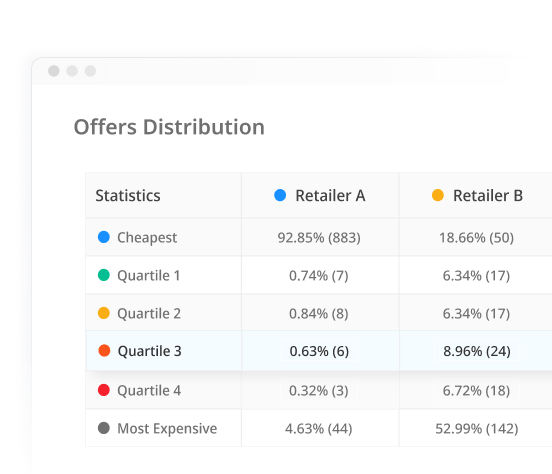
Quartile movement reflects a deliberate repositioning. A move downmarket aims to capture volume, while a move upmarket aims to strengthen margins and premium perception.
How to Respond
For Brands: Identify which competitor SKUs have moved tiers and which of your products now compete directly with them. Decide whether to defend your position through pricing and promotion, or reinforce your differentiation at a higher tier.
For Retailers: Identify SKUs that shifted quartiles and evaluate whether your price ladder still holds. Adjust pricing or assortment where the movement creates gaps or pressure in key tiers.
Why It Matters
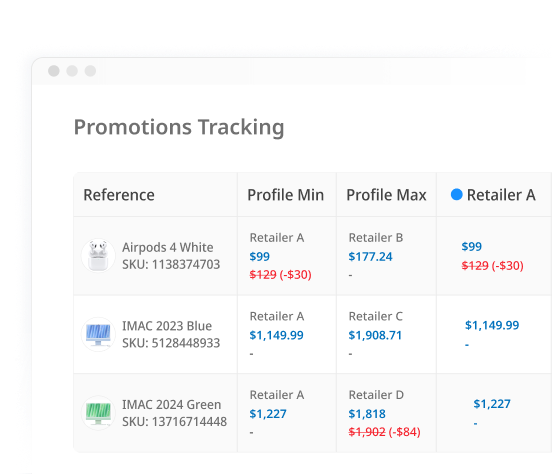
This indicates a price reset rather than a temporary promotion. If the new baseline holds, it can trigger wider price competition and permanently change category price levels.
How to Respond
For Brands: Identify SKUs where the promotional price has become the new baseline. Evaluate the impact on margin and retailer pricing expectations, and reset your promotional strategy accordingly.
For Retailers: Confirm whether the lower price becomes the new market baseline. If it holds, reassess and adjust category pricing to remain competitive on key items.