
Last Updated: March 23, 2026
TL;DR
Manual price checks can't keep up with the scale and frequency of modern ecommerce. Brands and retailers use structured pricing and market visibility tools to monitor competitors consistently, track trends over time, and support more confident pricing decisions. The right approach depends on whether you need product-level price tracking, broader market analysis, or both.
Key takeaways:
-
- Manual price checks cannot scale across products, competitors, and channels
- Structured tools provide consistent data for accurate comparisons
- Competitive price comparison requires both product-level and market-level visibility
- Historical context helps distinguish trends from short-term price movement
- Reliable data enables more confident pricing discussions and decisions
Why don't manual methods work for comparing competitor prices?
Many organizations begin by comparing prices manually, reviewing competitor websites, capturing screenshots, or maintaining spreadsheets. While these methods may provide a quick reference point, they are difficult to maintain and often incomplete.
Manual comparisons capture isolated moments rather than ongoing pricing behavior. As product assortments grow and competitors change pricing frequently, these methods require significant effort while still leaving gaps in visibility. Without consistent data collection, teams risk basing decisions on partial or outdated information.
What types of tools are used to compare prices with competitors?
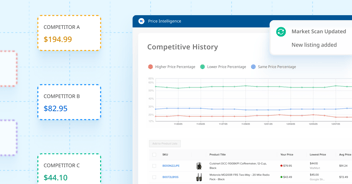
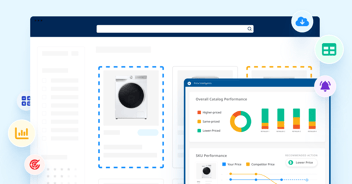
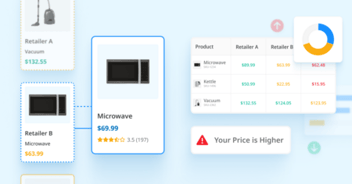
Brands and retailers use purpose-built pricing and market visibility platforms to collect and organize competitive pricing data on a recurring basis. These tools gather advertised prices across defined competitors and channels, allowing teams to review comparisons in a structured and repeatable way.
Instead of assembling information manually, teams can evaluate how their pricing aligns with the market, identify patterns over time, and maintain a shared understanding of competitive positioning.
When do companies need structured price comparison tools?
Structured tools become important when pricing decisions must be made across multiple products, retailers, or markets. As complexity increases, it becomes harder to rely on one-off comparisons.
Organizations often adopt pricing visibility tools when they need to monitor competitors consistently, understand pricing trends rather than single price points, support internal decision-making with reliable data, and evaluate positioning across broader assortments or categories.
These needs reflect a shift from informal observation to deliberate competitive analysis.
How do pricing comparison tools support better decision-making?
Effective tools provide an organized view of competitor pricing so teams can interpret changes within context. Historical visibility allows users to see how pricing evolves, helping distinguish sustained market movement from temporary fluctuations.
This consistency supports more productive internal conversations. Pricing, merchandising, and strategy teams can reference shared data rather than relying on anecdotal observations, leading to more aligned and confident decisions.
How do brands and retailers approach price tracking versus broader market analysis?
Brands and retailers typically choose an approach based on the question they need to answer. When the objective is to monitor competitor pricing for specific products across known competitors or retailers, a focused price monitoring approach is used. When the objective is to understand how pricing behaves across a wider category, including shifts driven by promotions or assortment changes, a broader market analysis approach is more appropriate.
Wiser Solutions offers solutions aligned to these distinct needs. Price Intelligence is designed to track competitor pricing for defined products and competitors, while Market Intelligence provides visibility into wider market activity so brands and retailers can evaluate pricing within overall category context.
How often should competitive price comparisons be reviewed?
Competitive comparisons are most valuable when reviewed regularly. Ongoing visibility helps organizations stay aware of changes without relying on periodic audits.
Many teams maintain consistent monitoring and conduct routine reviews to understand trends, assess alignment with competitors, and adjust strategy when necessary. Regular review ensures pricing decisions are based on current market conditions rather than delayed insights.
What should I look for when choosing a price comparison tool?
When evaluating tools, organizations typically consider the ability to collect pricing data consistently across competitors, coverage of relevant retailers, marketplaces, or categories, clear organization of data to support comparison and analysis, historical visibility to understand trends over time, and a structure that supports internal collaboration and decision-making.
The goal is not simply to gather prices, but to gain dependable visibility that can guide strategy.
If you want to learn how structured pricing visibility tools can support more effective competitive comparisons, reach out to Wiser to see how organizations use consistent market data to inform pricing decisions.
FAQs
What is the best way to compare prices with competitors?
The most effective approach is to use structured tools that consistently collect competitor pricing data and provide market context, allowing teams to compare prices over time rather than relying on one-time checks.
Can I compare competitor prices without software?
Manual comparison is possible for small product sets, but it becomes difficult to maintain as assortments, competitors, and pricing changes increase.
Why is historical pricing data important?
Historical data provides context, helping teams understand whether changes represent temporary promotions or longer-term shifts in market positioning.
Do I need different tools for monitoring and analysis?
Not necessarily. The right approach depends on what you are trying to understand. If the goal is to track pricing for specific products against known competitors, a product-level price monitoring approach may be sufficient. If the goal is to understand broader market positioning, including how pricing behaves across categories or channels, a market-level view may be more appropriate. The key is selecting a solution that aligns to the type of competitive insight your team needs.
How often should I review competitor pricing?
Regular monitoring combined with routine analysis helps ensure decisions reflect current market conditions and evolving competitive behavior.