
Last Updated: May 22, 2026
TL;DR:
Out-of-stock (OOS) issues quietly erode visibility, sales, and customer trust. Brands that actively monitor availability, forecast demand, and act quickly using real-time market data gain a measurable competitive edge.
In the ever-evolving landscape of e-commerce, brands must adapt to new challenges and opportunities across online retail environments. One of the most critical aspects of maintaining strong performance is ensuring product availability. When products go out of stock (OOS), it affects everything from discoverability to conversion.
In this article, we explore the importance of product availability, the impact of OOS situations, and three practical actions to prevent them. We also highlight how tools like Wiser’s Market Intelligence help teams detect and respond to availability issues in real time.
A Competitive Retail Environment
Today’s retail environment, whether online or omnichannel, is highly competitive. Consumers expect to find what they need instantly. If a product is unavailable, they move on quickly.
Product availability plays a central role in:
-
Maintaining visibility across retailers
-
Supporting consistent sales performance
-
Delivering a reliable customer experience
The Consequences of Out-of-Stock (OOS) Situations
Out-of-stock issues have a ripple effect across your business:
-
Decreased Visibility: Retail algorithms often prioritize in-stock products. When items go out of stock, visibility can drop, reducing your chances of being seen by potential buyers.
-
Lost Sales: If your product is unavailable, customers will buy from a competitor. These lost sales can quickly compound over time.
-
Damaged Brand Reputation: Frequent stockouts signal unreliability. Over time, this can erode trust and impact long-term customer loyalty.
Action Items to Prevent OOS
Preventing OOS requires a proactive, data-informed approach.
1. Implement Robust Inventory Management Systems
Effective inventory management is the foundation of availability. Key steps to take:
-
Conduct regular inventory audits
-
Use demand forecasting tools to anticipate future needs
-
Set automated reorder points to avoid stock gaps
2. Leverage Data for Demand Planning
Data-driven decisions reduce guesswork and improve accuracy. Key steps to take:
-
Analyze historical sales trends
-
Use predictive analytics to forecast demand
-
Monitor competitor activity and broader market trends
3. Strengthen Supplier Relationships and Diversify Supply Chains
Your supply chain is only as strong as its weakest link. Key steps to take:
-
Maintain clear communication with suppliers
-
Negotiate flexible terms for demand shifts
-
Introduce alternative suppliers to reduce risk
Using Market Intelligence to Stay Ahead
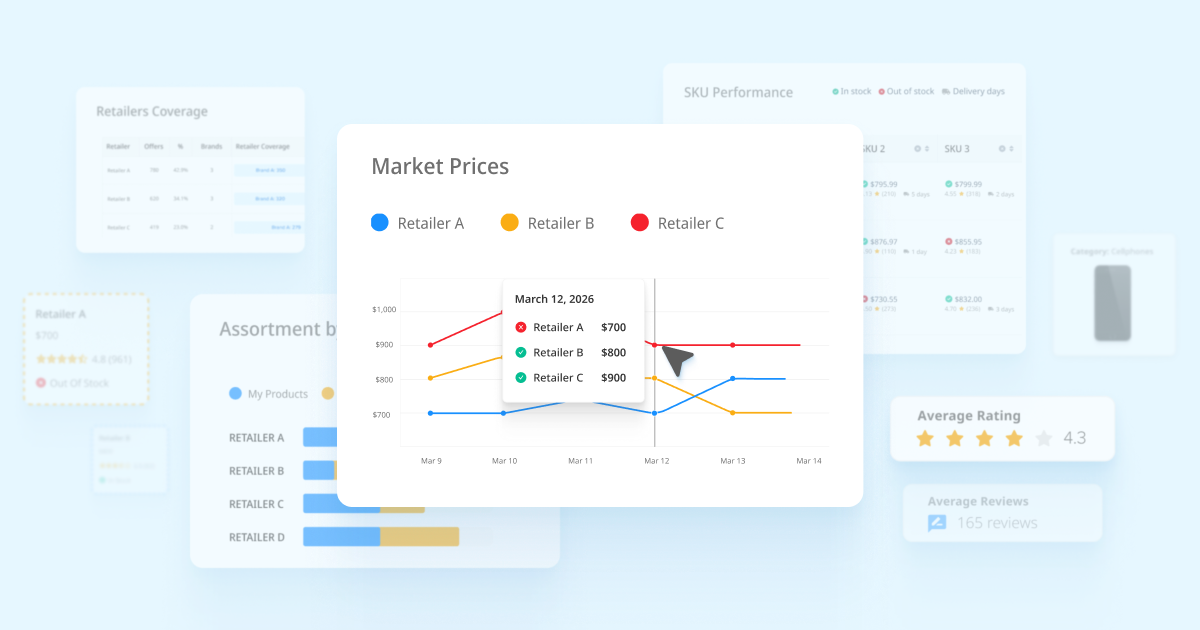
Reacting quickly is just as important as planning ahead. Market Intelligence solutions provide visibility into:
-
Product availability across retailers
-
Competitive activity and stock patterns
-
Historical trends that signal recurring issues
Wiser’s Market Intelligence helps teams stay informed with real-time alerts when products go out of stock. This allows for immediate action, whether that means replenishing inventory, adjusting strategy, or shifting focus to alternative products.
Key Benefits of Market Intelligence
-
Real-Time Alerts: Get notified immediately when availability issues arise
-
Market Visibility: Understand how your products perform across retailers
-
Actionable Reporting: Identify trends, gaps, and opportunities to improve performance
Discover how this brand strengthened its market strategy with Market Intelligence.
Conclusion
Product availability remains one of the most important drivers of retail success. Out-of-stock issues impact visibility, revenue, and customer trust.
By combining strong inventory management, data-driven planning, and real-time market visibility, brands can reduce risk and respond faster when issues arise.
In a competitive retail environment, staying in stock is not just operational, it is strategic
Prioritize sales growth and set up a meeting with Wiser.
FAQs
Because availability directly impacts visibility, sales, and customer satisfaction. If a product is not available, it cannot be purchased.
Common causes include inaccurate forecasting, supply chain disruptions, delayed replenishment, and unexpected demand spikes.
By combining inventory management systems, demand forecasting, supplier diversification, and real-time monitoring tools.
Market Intelligence provides visibility into availability across retailers, helping teams detect issues early and take action faster.
Immediately. The longer a product remains out of stock, the greater the impact on sales and visibility.