
Last Updated: May 6, 2026
TL;DR
Price crawling collects raw competitor pricing data, while price intelligence turns that data into actionable insights. Crawling gives you visibility, intelligence helps you make decisions. Most retail teams benefit from using both to stay competitive and respond to market changes faster.
What Is the Difference Between Price Crawling and Price Intelligence?
Price crawling and price intelligence are often used interchangeably, but they serve very different purposes. Price crawling focuses on collecting data. Price intelligence focuses on using that data to make better decisions.
Understanding the difference is critical if you want to build an effective retail pricing strategy.
Price Crawling: Collecting Raw Pricing Data
Price crawling is the process of gathering competitor pricing data from websites using automated bots.
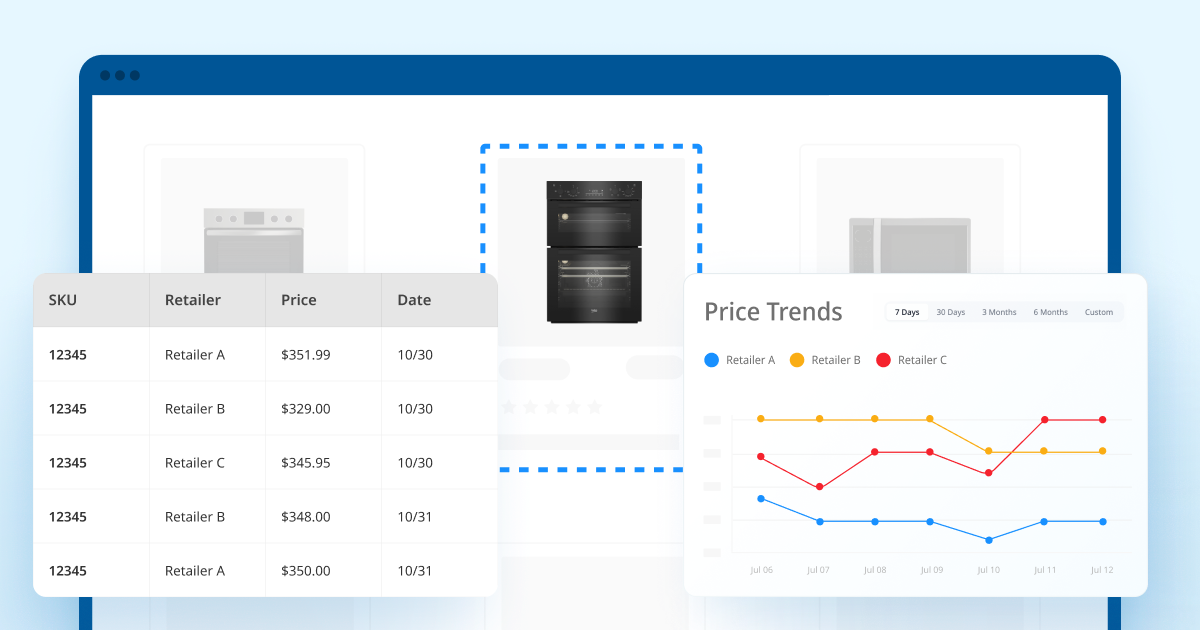
These tools scan product pages and collect:
-
Prices
-
Product details
-
Availability
-
Promotional information
The result is a large volume of raw data, often delivered in files like CSV exports.
This approach provides broad visibility across competitors and assortments, especially for teams managing thousands of products. However, the data is unprocessed. It requires time, tools, and expertise to interpret and act on effectively.
For organizations with strong internal analytics teams, price crawling can be a valuable input. Without that support, it can quickly become overwhelming.
Price Intelligence: Turning Data Into Action
Price intelligence builds on price crawling by adding analysis, context, and decision-making support.
Instead of just showing what competitors charge, price intelligence helps teams understand:
-
How pricing compares across the market
-
Where they are over or underpriced
-
How pricing impacts performance
-
What actions to take next
This allows teams to move from observation to execution.
With price intelligence, retailers can:
-
Monitor competitors continuously
-
Benchmark pricing and promotions
-
Adjust pricing with precision
-
Protect margins while staying competitive
Unlike crawling, which provides a snapshot, price intelligence delivers ongoing insights and guidance.
Why Pricing Matters in Consumer Decision-Making
The value of both approaches comes down to how pricing influences shopper behavior. Consumers compare prices instantly across retailers. Even small differences can impact purchase decisions.
Research shows that 62% of consumers rank price as the most important factor in their buying decisions, while 52% say rising prices directly affect what they purchase. For retailers, this means pricing is not just operational. It is strategic. Staying competitive requires understanding the market and responding quickly to change.
How Leading Retailers Use Price Intelligence
Leading retailers use price intelligence to replace guesswork with data-driven decisions.
The Very Group moved from instinct-based pricing to real-time competitive insights, enabling faster and more profitable adjustments.
Build.com, managing hundreds of thousands of SKUs, shifted from broad pricing strategies to precise, product-level decisions without sacrificing margins.
These examples highlight how pricing intelligence supports both scale and precision.
How to Choose Between Price Crawling and Price Intelligence
Leading retailers use price intelligence to replace guesswork with data-driven decisions.
The Very Group moved from instinct-based pricing to real-time competitive insights, enabling faster and more profitable adjustments.
Build.com, managing hundreds of thousands of SKUs, shifted from broad pricing strategies to precise, product-level decisions without sacrificing margins.
These examples highlight how pricing intelligence supports both scale and precision.
How to Choose Between Price Crawling and Price Intelligence
Choosing the right approach depends on your team’s capabilities and goals. Price crawling is the right fit if:
-
You need raw data quickly
-
You have internal resources to analyze it
-
You want full control over pricing decisions
Price intelligence is the better choice if:
-
You need insights, not just data
-
You want automation and alerts
-
You need to act quickly in a changing market
Most retail teams use both. Crawling provides visibility, while intelligence provides direction.
The Role of Pricing Data in Competitive Strategy
Pricing data is only valuable if it leads to action. Retailers that rely on pricing insights can:
-
Respond faster to competitors
-
Reduce pricing errors
-
Improve margin performance
-
Stay aligned with market expectations
This is what turns pricing from reactive to strategic.
Final Thoughts
Price crawling and price intelligence are not competing approaches. They serve different roles in the same process. Crawling helps you see the market. Intelligence helps you respond to it.
Retailers that combine both gain the visibility and control needed to compete in fast-moving markets.
FAQs
Price crawling is the automated collection of competitor pricing data from websites.
Price intelligence combines pricing data with analytics and insights to support decision-making.
Many retailers use both. Crawling provides raw data, while intelligence helps interpret and act on that data.
In competitive markets, pricing data should be updated multiple times per day to stay accurate and relevant.
.png?width=352&name=Wiser%20vs%20(Targeted%20Vendor%20Campaign).png)