In the weeks around Black Friday, competitor sites fill with deal badges, countdown timers, and sale banners. Each one signals movement, and the natural reaction on a retail pricing team is to answer it.
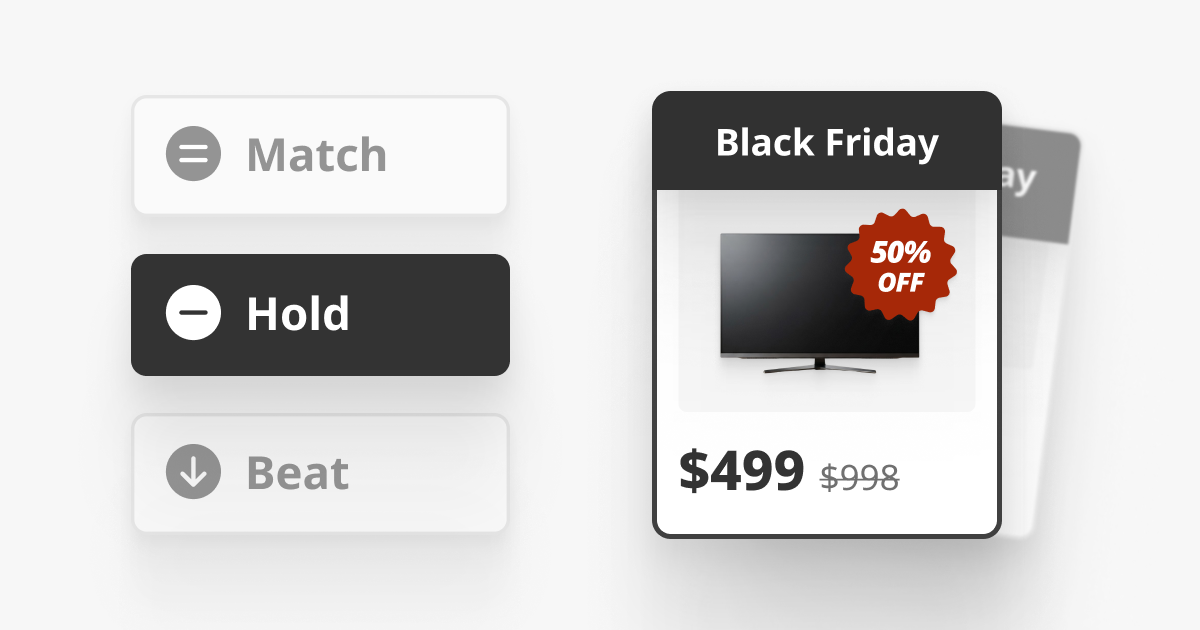
That reaction is understandable, but it treats every banner as proof that a price dropped. A badge only says a retailer is calling a product a deal. The retailer may be charging exactly what it did last week, and matching that price gives up margin to answer a move that never happened. The response comes down to three choices in competitive pricing: matching means setting your price equal to a competitor’s, holding means leaving yours where it is, and beating means going lower. Choosing among them works best when it’s decided before the event, not in the middle of it.
Before the event: agree on what to watch and how to respond
The first step is looking back. Retailers do not plan only around their own products; they also look at what competitors did during previous events, such as last year’s Black Friday. Which categories and brands were promoted, how deep the discounts went, and what types of deals were offered all show where the heaviest competition is likely to fall this time.
That history matters because a competitor’s promotion sends shoppers out to compare. Retailers have described shoppers visiting other sites to check prices before buying when a competitor promotes an item, a pattern seen around Amazon’s Prime events, so a price that is not competitive on a popular promoted item puts those sales at risk.
Amazon’s October Prime event gives a second reference point. Many retailers treat the lowest Amazon price from that event as a floor for the prices they expect to see on Black Friday, if it is the lowest price they have seen for the item.
The next step is deciding ahead of time which products to watch and how to respond to each. Tracking every SKU at even intensity is rarely practical, so the watch list starts with the products where a competitor’s price matters most. Three roles tend to earn a place on the list:
- Traffic drivers are the products that pull shoppers to a site or store, and shoppers compare prices on them across retailers. A competitor price below yours can cost you the site visit, so the rule leans toward matching, or beating where the margin allows.
- Price-perception items are the frequently bought, easily remembered products (think milk in grocery or a popular TV in electronics) that shape how shoppers judge a retailer’s prices overall. A shopper who finds them cheaper elsewhere may assume the rest of the catalog is too, so the rule leans toward matching.
- Margin contributors are the products that carry profit and tend to be less price-sensitive. Matching a competitor here gives up margin for little traffic in return, so the rule leans toward holding unless the lower price proves to be more than a one-day dip.
Attaching rules to a product's role, instead of to its category, matters because one category usually holds products in more than one of these roles. A category-wide response treats them alike: it can leave traffic drivers overpriced if the cut is too shallow to matter. One US online home improvement retailer found this out when category-level adjustments over-discounted some products and left others overpriced, and it later moved to SKU-level strategies. When a competitor does cut across a whole category, the rules still decide which products follow.
During the event: read each competitor's price against its own history
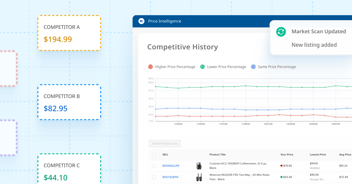
Once the event is running, the question for each competitor price is whether it sits below what that competitor charged in the days before. Answering it takes structured monitoring, which keeps each price on record over time instead of capturing a single snapshot. With both prices in hand, most situations fall into three cases:
- The price hasn't moved. The competitor has added a deal label to a price it was already charging. A shopper's comparison is the same as last week, so the usual rule is to hold.
- The price dropped. The competitor is now lower than it was previously. If the product is in stock, this is the case the rules written earlier exist for, and the product's role decides whether to match, hold, or beat. If it is out of stock, the low price isn't pulling shoppers away from anyone yet, so the response can wait until the product is back in stock.
- The discount looks bigger than the change. A “was” price can sit above what the competitor charged for most of the past few weeks, so the percentage off on the banner is larger than the real change. Reading the price against its history shows the actual size of the move, and the response can be sized to that instead of to the headline.
The third case has a standard behind it. The FTC’s pricing guides say a “was” price should be one the product was genuinely offered at for a reasonably substantial period.
Nobody can check every product on a full watch list by hand across a multi-day event, so notifications do the first pass. A daily alert email can list competitor price changes on the products on the list, and it can be set to leave out products where the team's own price is already lower. That email only starts the check: the competitor's recent history shows whether the change is real or only looks large, and its stock status shows whether the change matters yet.
Many retailers fix their event promotions in advance and leave them untouched for the whole event. One large electronics retailer works differently: it uses competitor price data to price match throughout the week, acting on each price as the need arises.
After the event: review which moves mattered
The review starts with the responses already made. For each match, the question is what the competitor did next. If its price went back up within a day, the match gave up margin to answer a short dip, and the rule for that product may need to wait longer before responding. The same check works in reverse: a competitor price that stayed low after a hold suggests the rule was too slow.
The review is worth doing soon after the event, while the details are still fresh. Which retailers moved first, which categories saw the deepest cuts, and how long the lower prices lasted can then be written down, so next year’s look-back and next year’s rules start from what happened instead of from memory of the event.
Why the record matters
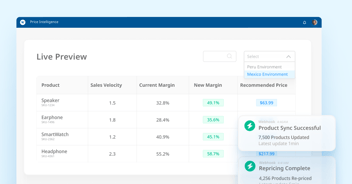
Every stage above depends on one thing: a record of what each competitor charged before the event began. Wiser’s Price Intelligence tracks competitor prices at the SKU level, including price drops, regular price, and availability, and keeps the price history for each product. Its data feed adds historical price timelines and promotion flags where they are captured, so a team can also look back at how competitors priced and promoted in earlier events. On Black Friday and during the other big sales that matter most to a retailer’s year, the team that knows what a competitor charged last week can tell which deals deserve an answer.
To see competitor prices, availability, and price history for the products on your own watch list, book a call with the Wiser team.