
TL;DR
Comparing your prices against competitors requires more than checking a few product pages. Accurate comparison depends on structured market data, consistent product matching, and visibility into promotions, seller variation, and category positioning. Market Intelligence platforms help brands and retailers evaluate competitive price positioning with context and confidence.
Key takeaways:
• Price comparison requires structured, consistent market data
• Looking at one product at a time can distort overall positioning
• Promotions and seller variation affect perceived price gaps
• Category context reveals whether you are premium, aligned, or discounted
• Ongoing visibility supports deliberate, confident pricing decisions
How do I accurately compare my prices against competitors?
Many teams begin by comparing prices manually, opening competitor websites, checking a few product pages, and recording the differences. While this may provide a quick snapshot, it rarely provides an accurate or complete picture.
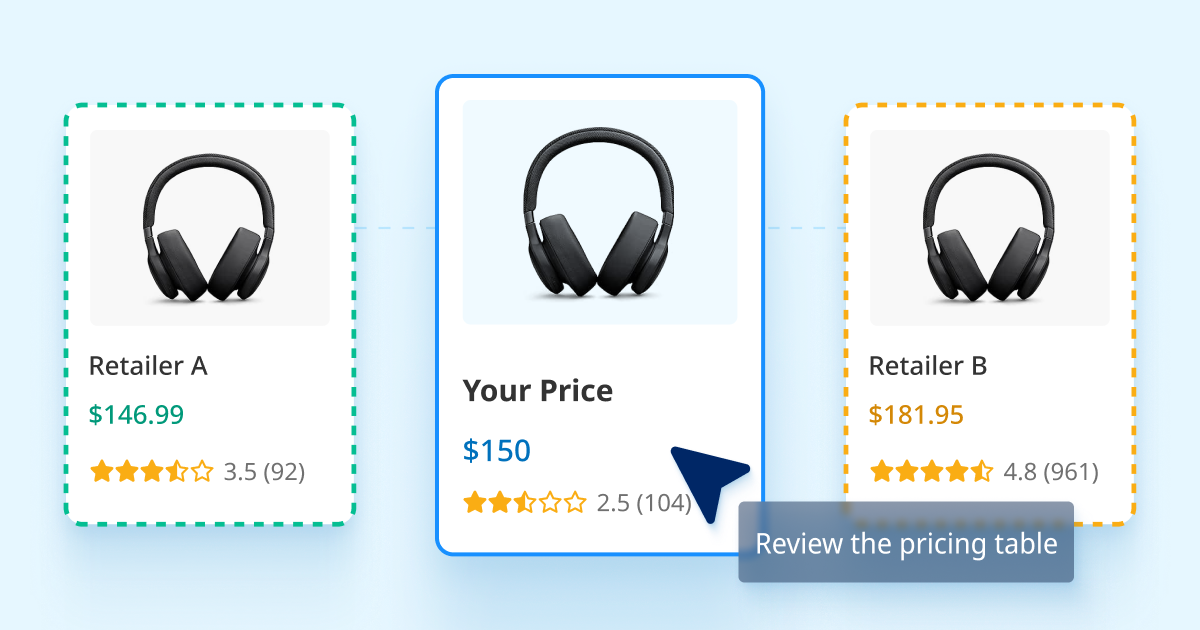
Effective price comparison starts with structured data. Products must be consistently matched across competitors so that like-for-like comparisons are possible. Without consistent matching and coverage, it is easy to misinterpret isolated differences as meaningful trends.
A reliable comparison framework allows you to evaluate your pricing against defined competitors across retailers and channels. Instead of reacting to one visible price gap, you gain a broader understanding of how your assortment is positioned within the market.
Should I compare prices at the product level or the category level?
SKU-level comparison is useful when evaluating specific products, especially high-visibility or high-volume items. It allows teams to see exactly where a product sits relative to a direct competitor.
However, product-level comparison alone does not reveal overall positioning. Category-level context helps answer larger questions. Are you consistently priced above the competitive set? Are you discounting more aggressively than others? Does your assortment skew premium, aligned, or value-oriented?
Understanding price distribution across a category often reveals patterns that individual product checks cannot. When viewed together, these insights provide a more strategic understanding of competitive positioning.
How do promotions affect competitive price comparison?
Promotions can significantly distort price comparisons if they are not evaluated carefully. A temporary discount may make a competitor appear structurally cheaper, even if their everyday pricing is aligned with the market.
Accurate comparison requires distinguishing between short-term promotional activity and sustained pricing behavior. Historical visibility is critical here. When you can see how prices move over time, you can identify whether a drop is part of a recurring promotion cycle or a broader pricing shift.
Without this context, teams risk reacting to short-term events rather than making informed strategic decisions.
How do marketplaces and third-party sellers impact price comparisons?
Marketplaces introduce another layer of complexity. Multiple sellers may list the same product at different prices, creating variation within a single retailer environment.
Looking only at the lowest advertised price can misrepresent overall positioning. Seller mix, fulfillment method, and channel dynamics all influence how a product is priced and perceived.
Comparing your prices effectively means evaluating pricing across retailers and marketplaces while accounting for seller variation. This broader visibility ensures that decisions are based on representative market conditions rather than isolated outliers.
How often should I review my competitive price positioning?
Competitive price comparison should not be a one-time exercise. Markets shift, competitors adjust strategies, and promotions cycle throughout the year.
Most brands and retailers benefit from maintaining daily or near-daily visibility into pricing movement, conducting deeper weekly analysis, and evaluating broader positioning trends on a monthly basis. This structured cadence allows teams to stay informed without overreacting to temporary fluctuations.
Consistency builds clarity. Regular review ensures that pricing decisions are proactive rather than reactive.
What is the best tool for comparing my prices against competitors?
The most effective way to compare prices at scale is through a Market Intelligence platform that provides structured competitive data across retailers and marketplaces.
Wiser Solutions Market Intelligence enables brands and retailers to evaluate competitive price positioning across categories, competitors, and channels. By combining consistent product matching, category context, promotional visibility, and historical trends, Market Intelligence supports more informed and confident pricing decisions.
Rather than relying on manual checks or isolated data points, teams gain a clear and comprehensive view of how their pricing compares within the broader market.
If you want to understand how Market Intelligence can support more accurate competitive price comparisons, reach out to Wiser to learn how structured market visibility helps brands and retailers make pricing decisions with greater clarity and control.
FAQs
What is the best way to compare my prices against competitors?
The best approach is to use structured market data that consistently matches products across competitors and retailers. This allows for accurate like-for-like comparisons and broader category analysis rather than relying on isolated spot checks.
How can I tell if I am priced too high or too low?
Evaluating your price relative to the competitive set across products and categories helps determine whether you are positioned above, below, or aligned with the market. Historical trends and category context provide deeper insight than single-point comparisons.
Should I compare base prices or promotional prices?
Both matter. Base prices reveal structural positioning, while promotional pricing shows competitive intensity. Effective comparison requires visibility into both.
How do marketplaces affect competitive price analysis?
Marketplaces often include multiple sellers with varying prices. Accurate comparison requires evaluating pricing across sellers and channels rather than focusing only on the lowest listed price.
How often should competitive pricing be reviewed?
Most organizations benefit from maintaining consistent daily visibility, conducting weekly reviews for analysis, and evaluating broader trends monthly to support strategic pricing decisions.