

Last Updated: September 14, 2026
TL;DR
-
Daily alerts help pricing, ecommerce and compliance teams respond quickly to competitor moves, stock-outs and violations.
-
Weekly reports filtered by category, brand or region help teams prioritize actions and support cross-functional planning.
-
Historical pricing data supports quarterly and seasonal strategy, from vendor negotiations to campaign planning.
Price Intelligence works best when it becomes part of a team's daily rhythm, not just a quarterly reference point.
Introduction
Price Intelligence delivers the most value when it's part of everyday workflows. While it plays a role in quarterly business reviews, its real strength comes through consistent use. The teams who get the most out of Price Intelligence build it into their routine, using it to monitor the market, track performance and align actions across functions. Here are three ways teams are using Price Intelligence to power their decisions every day.
1. Monitoring Urgent Changes in Real Time
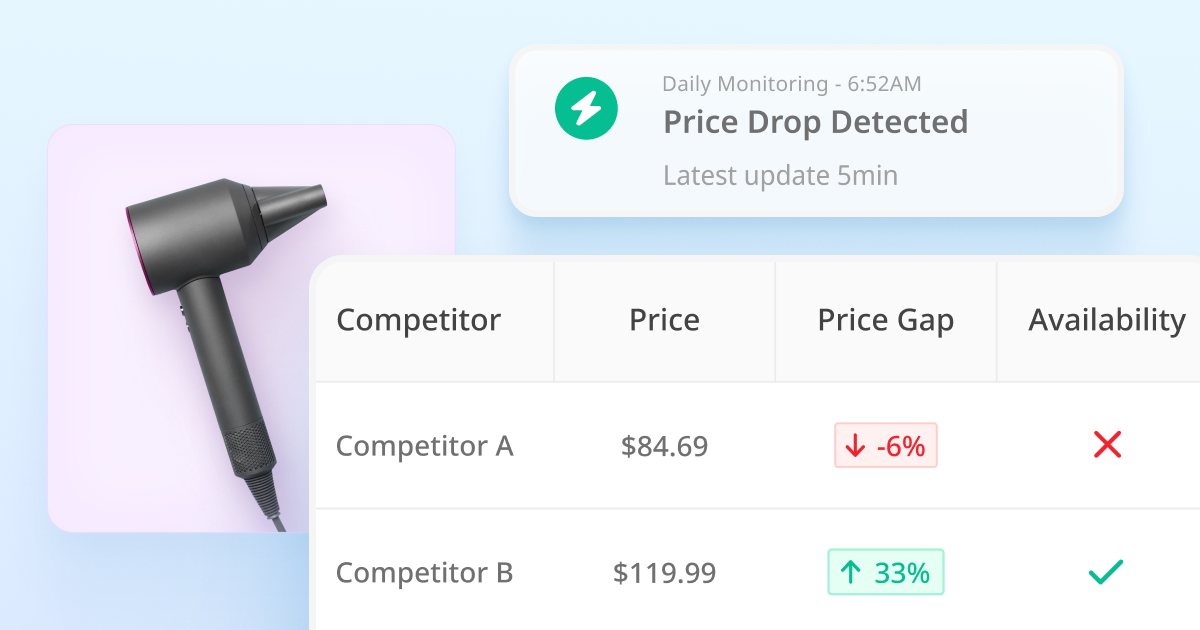
Many teams rely on daily alerts and dashboards to monitor price changes and stock availability across retailers. Alerts flag sudden competitor moves, out-of-stock issues and violations that require quick action. This use is especially common among pricing managers, ecommerce analysts and compliance teams who need to respond fast when market conditions shift.
2. Prioritizing Actions with Weekly Reports
Recurring reports, often filtered by category, brand, or region, help teams identify pricing gaps, promotional coverage and assortment differences at a glance. These reports typically feed into Monday planning meetings, promotional readiness checks or end-of-week wrap-ups. Some teams also export dashboards for use in cross-functional discussions, using data to back up recommendations or escalate needed changes.
3. Guiding Strategic Planning with Historical Context
Beyond daily and weekly activity, Price Intelligence also supports quarterly and seasonal planning. Retailers use the data feed to analyze historical pricing trends, monitor regional differences and assess competitor promotional strategies. This kind of analysis helps teams prepare for vendor negotiations, align future campaign calendars and sharpen their pricing strategies with real-world benchmarks.
Wiser Solutions
Wiser's Price Intelligence platform is built to support this full range of use, from real-time alerts to long-term strategic analysis. Whether your team checks dashboards daily or pulls historical data once a quarter, Price Intelligence delivers accurate, actionable data at the speed your workflow requires.
Teams can access Price Intelligence through the platform or through a direct data feed, depending on how the data needs to move through existing systems. Either way, the underlying pricing and availability data stays consistent, so teams across functions are always working from the same source of truth.
Closing Thoughts
When used to its full potential, Price Intelligence is more than just price tracking. It enables smarter, faster and more strategic decisions across your organization.
Through consistent use, it helps teams stay agile, spot risks early and plan ahead with confidence. The value compounds over time as alerts, reports and historical data work together to inform decisions at every level.
Whether your team relies on the platform, the data feed, or both, Wiser can help you turn this data into daily momentum.
FAQs
It depends on the use case. Many teams check alerts and dashboards daily, review reports weekly, and pull historical data quarterly for strategic planning.
Pricing managers, ecommerce analysts, and compliance teams are the most frequent daily users, though the data also supports merchandising and marketing decisions.
The platform provides dashboards and alerts for direct use, while the data feed delivers the same underlying data for teams that want to integrate it into their own systems and reports.
Yes. Historical pricing and promotional data help teams prepare for vendor negotiations, plan campaign calendars, and benchmark pricing strategy over time.
Teams often filter reports by category, brand, or region and bring them into planning meetings or cross-functional discussions to support and prioritize action.

.png?width=352&name=Wiser%20vs%20(Targeted%20Vendor%20Campaign).png)
.png?width=352&name=BLOG-PURE%20PLAYER-USECASE-1200x630%20(1).png)