
TL;DR
Winning the Buy Box isn’t about being the cheapest. Marketplaces reward offers that deliver consistency, reliability, and trust. Brands that treat the Buy Box as a control system and not a price war maintain authority, reduce volatility, and protect long-term value.
What is the Buy Box?
The Buy Box is the primary offer shown to shoppers on marketplaces like Amazon and Walmart. It is one of the clearest signals of how a brand is presented, trusted, and experienced by customers at the point of purchase.
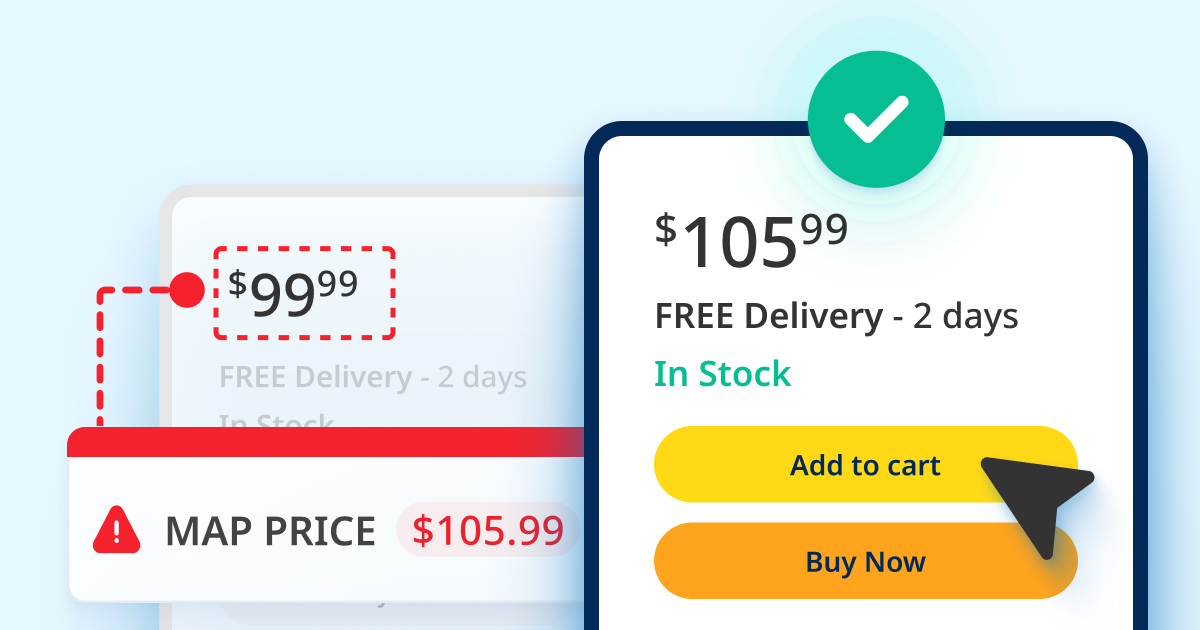
Too often, Buy Box strategy for brands is reduced to a pricing exercise. For brands selling across marketplaces like Amazon and Walmart, that framing misses the point and creates avoidable risk. Price matters but Buy Box outcomes are just as much about control, consistency, and intent as they are about competitiveness. When brands treat the Buy Box as a price contest, they can get pulled into spirals driven by unauthorized resellers, policy leakage, and “match the lowest” automation, sometimes pushing public offer prices below MAP and resetting customer expectations.
Sustainable Buy Box performance comes from understanding how marketplaces evaluate offers and using those signals to reinforce brand strategy rather than undermine it.
Why The Buy Box Reflects Trust, Not Just Price
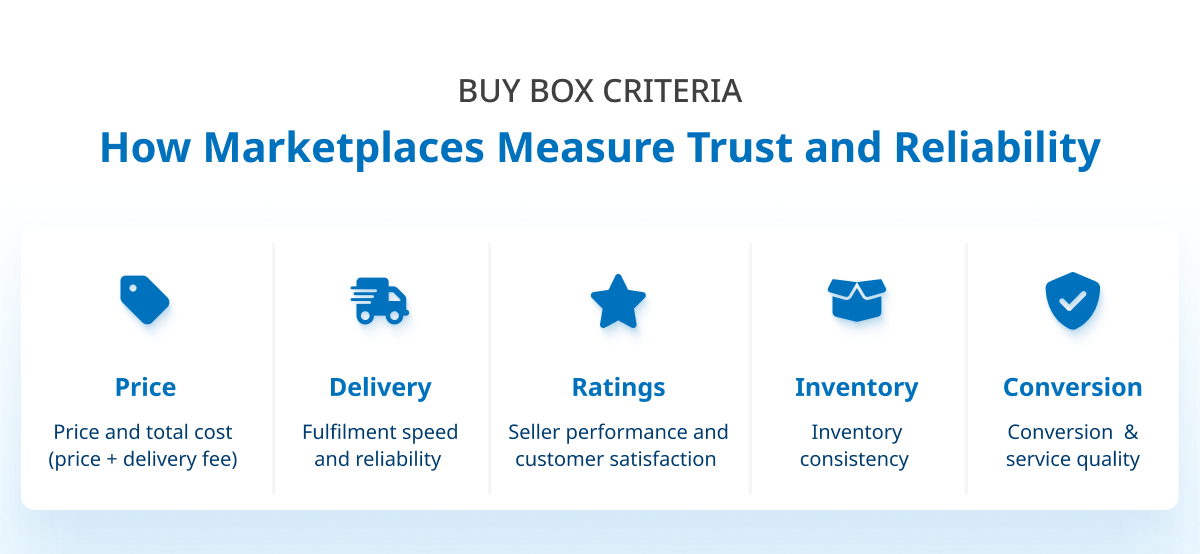
Marketplaces don’t award the Buy Box simply to the lowest-priced offer. They prioritize the offer most likely to deliver a reliable, high-quality customer experience.
That evaluation typically includes signals such as:
- Price and total cost (price + delivery fee)
- Fulfilment speed and reliability
- Seller performance and customer satisfaction
- Inventory consistency
- Historical conversion and service quality
For brands, these signals often reflect deliberate investments in infrastructure, service, and availability. When those signals are strong, price becomes one input among many, not the sole deciding factor.
In this context, the Buy Box acts as a proxy for trust. It rewards offers that appear stable, authoritative, and dependable to buyers.
Where Price-First Buy Box Strategies for Brands Fall
When Buy Box strategy is driven primarily by price, brands often experience unintended consequences:
- Aggressive discounting can weaken price perception and confuse customers about a product’s true value. Over time, this erodes pricing integrity and makes it harder to maintain consistent positioning. Frequent concessions also train competitors to respond, accelerating a race downward that rarely benefits the brand.
- Price-first strategies can also amplify channel conflict. Unchecked competition encourages unauthorized sellers, gray-market activity, and instability across partner relationships. In the worst cases, “match the lowest” behaviour and policy leakage can pull public offer prices below MAP, creating enforcement burden and anchoring shoppers to a lower reference price that is difficult to reset.
- Perhaps most importantly, frequent price concessions reduce pricing authority. Once buyers and competitors learn that price is easily negotiated, it becomes increasingly difficult to reset expectations.
In practice, brands that optimize solely for short-term Buy Box wins often lose control over how their products are represented in the marketplace.
When the Buy Box Reinforces Brand Authority
Brands tend to maintain Buy Box ownership (even at higher prices) when the Buy Box reflects consistency rather than aggressiveness.
This often occurs when:
- The brand-owned offer serves as the most reliable fulfilment option
- Availability remains consistent while other sellers fluctuate
- Customer trust signals reinforce confidence in the offer
- The brand’s listing acts as the reference point for the product
In these cases, Buy Box outcomes are anchored by stability. Rather than chasing every competitive move, the brand’s offer becomes the default choice buyers trust. Over time, marketplaces tend to reward this predictability.
Buy Box Strategy as a Control System
In practice, brand-led Buy Box management focuses on reducing noise and reinforcing intent. This often includes:
- Anchoring the Buy Box with the brand-owned offer: consistency in availability and fulfilment allows the brand’s offer to act as the reference point, reducing the need for frequent price intervention.
- Differentiating responses based on seller legitimacy: not every shift requires action. Pricing decisions should depend on who holds the Buy Box and whether that outcome aligns with brand policy and long-term goals.
- Using availability as a stabilizing signal: when the brand maintains reliable stock, temporary competitor disruptions rarely justify reactive discounting.
- Managing Buy Box outcomes at the portfolio level: some products function as visibility anchors, while others allow more flexibility. Treating them differently helps balance control, margin, and reach.
- Revisiting decisions as market conditions evolve: seller behavior, assortment, and availability change over time. Regularly reviewing Buy Box outcomes in context helps ensure pricing actions continue to serve their intended purpose.
These decisions reduce volatility and help ensure Buy Box performance reflects brand intent rather than short-term market fluctuations.
The Bigger Picture: Buy Box as Brand Infrastructure
The Buy Box is part of how trust is established and maintained on marketplaces.
Brands that approach Buy Box strategy with discipline, context, and clear intent achieve more stable visibility than those that rely on price alone. Over time, Buy Box performance improves when pricing and availability decisions reinforce brand authority and customer experience, not just immediate competitiveness.
*If you’re a marketplace seller, Buy Box strategy often comes down to a different set of tradeoffs. Here’s how sellers approach it: How to Win the Buy Box without racing to the bottom
FAQs
Q: Is the Buy Box only about price?
A: No. Price is one signal, but fulfilment, availability, seller performance, and customer trust often matter just as much.
Q: Can brands win the Buy Box at higher prices?
A: Yes, when consistency, fulfilment reliability, and trust signals are strong.
Q: Do unauthorized sellers affect Buy Box outcomes?
A: Yes. They can introduce volatility, MAP leakage, and instability if not actively managed.
Q: Should every Buy Box loss trigger a price change?
A: No. Response should depend on seller legitimacy, SKU role, and long-term strategy.