
.png?width=1200&name=BLOG-PURE%20PLAYER-USECASE-1200x630%20(1).png)
Last Updated: September 14, 2026
Contributing author is Vaibhav Laroia, VP of Customer Success at Wiser Solutions.
TL;DR
Retail pricing strategies range from cost-plus and competitive pricing to dynamic and psychological pricing. While traditional methods remain common, technology is enabling more data-driven, real-time pricing decisions that improve competitiveness and profitability.
| Strategy | What It Is | When It’s Used |
| Cost-Plus Pricing | Adds a markup to cost | Simple, stable environments |
| Competitive Pricing | Prices based on competitors | Highly competitive markets |
| Dynamic Pricing | Adjusts prices in real time | Ecommerce and high-volume retail |
| Penetration Pricing | Low entry pricing | New product launches |
| Price Skimming | High initial price, then lowers | Innovative or unique products |
| Psychological Pricing | Pricing for perception (e.g. $9.99) | Consumer-driven markets |
Retailers employ a variety of pricing strategies to stay competitive, optimize profits, and meet customer expectations. These strategies are influenced by factors such as market dynamics, customer behavior, and technological advancements.
This discussion explores common pricing strategies, how frequently they are used, the challenges of implementing them, and how technology is shaping pricing decisions.
Different Pricing Strategies and Examples
Retail pricing continues to evolve, with pricing at the center of decisions that directly impact customer perception and profitability. Understanding the most common pricing strategies helps retailers navigate this complexity.
-
Cost-Plus Pricing: One of the simplest approaches, where a markup is added to the cost of goods. While straightforward, it does not account for customer willingness to pay or competitive pressure.
-
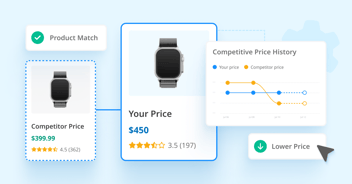
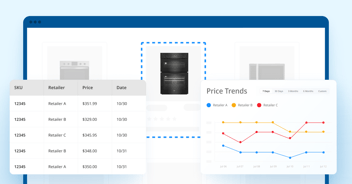
Competitive Pricing: Prices are set based on competitors. This requires ongoing monitoring and can lead to price competition that impacts margins.
-
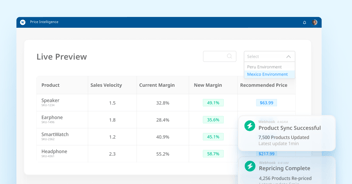
Dynamic Pricing: Prices are adjusted in real time based on demand, competitor pricing, and external factors. Common in ecommerce and travel industries.
-
Penetration Pricing: Lower prices are used to enter a market or launch a product, with increases over time as demand grows.
-
Price Skimming: Products are introduced at a higher price and reduced gradually. Often used for new or innovative products.
-
Psychological Pricing: Pricing designed to influence perception, such as pricing just below a round number.
Usage Frequency and Implementation Challenges
The effectiveness and adoption of pricing strategies vary depending on market position, customer base, and operational capabilities.
Dynamic and competitive pricing are widely used due to their responsiveness to market changes. However, dynamic pricing is more complex to implement, requiring advanced tools and real-time data.
Cost-plus pricing is easier to manage but less effective in competitive environments. Penetration and skimming strategies are typically used in specific scenarios, such as product launches.
The Role of Technology in Retail Pricing
Technology has significantly changed how pricing strategies are executed.
Advancements in data analysis and machine learning allow retailers to:
-
analyze large volumes of pricing and market data
-
identify pricing opportunities and risks
-
adjust pricing more quickly and accurately
Predictive models and simulations can improve pricing accuracy and help identify mispriced products. These tools support more informed decisions and allow retailers to respond to market changes with greater confidence.
However, adopting these technologies can present internal challenges. Teams may be hesitant to rely on algorithm-driven decisions, especially when they disrupt traditional workflows or incentives.
Conclusion
Retail pricing strategies continue to evolve as technology advances and market conditions change.
While traditional approaches remain relevant, the ability to use data and adapt pricing in real time is becoming increasingly important. Retailers that combine strong foundational strategies with modern technology are better positioned to stay competitive and protect margins over time.
FAQs
Common strategies include cost-plus pricing, competitive pricing, dynamic pricing, penetration pricing, price skimming, and psychological pricing.
Dynamic pricing adjusts prices in real time based on factors such as demand, competitor pricing, and market conditions.
Competitive pricing helps retailers remain aligned with the market, attract customers, and avoid losing share to competitors.
Technology enables retailers to analyze data, automate pricing decisions, and respond to market changes more quickly and accurately.
Challenges include managing data, aligning internal teams, maintaining margins, and adapting to changing market conditions.