
Last Updated: April 23, 2026
TL;DR
Merchandising issues like out-of-stocks, poor restocking, missing signage, and broken displays directly impact sales and brand perception. The faster you identify and act on these issues at the store level, the more revenue you protect.
-
Out-of-stocks reduce available sales
-
Poor restocking creates inconsistent availability
-
Missing or conflicting signage hurts visibility
-
Broken displays damage brand perception
-
Lack of display compliance weakens promotions
Even the best retail merchandising strategy can break down in-store. Missing signage, out-of-stocks, and poorly maintained displays don’t just affect presentation, they directly impact sales and brand perception.
The challenge is not just knowing these merchandising issues exist, but identifying where and when they happen so teams can act quickly and improve overall retail execution.
5 Merchandising Issues That Impact Sales
1. Out-of-Stocks and Shelf Gaps
Out-of-stock products create visible gaps on shelves and displays, impacting overall shelf health and making assortments look incomplete.
Why it matters: Fewer available products mean fewer opportunities to convert shoppers.
Impact: Lost sales and a weaker brand presence at the shelf.
2. Inconsistent Restocking
Replenishment is not one-size-fits-all. Some stores require more frequent restocking than others, depending on demand and product movement. Poor alignment can lead to ongoing retail execution issues.
Why it matters: Misaligned restocking leads to either empty shelves or excess inventory.
Impact: Missed sales opportunities and inefficient inventory management.
3. Missing or Conflicting Signage
You can’t control where competitors place their products, but you can control how your products show up. Missing signage, poor product placement, or competing products covering your displays can make it harder for shoppers to find and choose your brand.
Why it matters: Visibility directly influences purchase decisions.
Impact: Reduced product discovery and lower conversion.
4. Broken or Poorly Maintained Displays
In-store merchandising relies on displays that attract attention and communicate value. Displays that depend on lighting, screens, or physical structure require ongoing maintenance.
Why it matters: Broken displays disrupt the shopper experience and weaken brand perception.
Impact: Missed opportunities to engage shoppers and reduced in-store effectiveness.
5. Display Compliance Issues
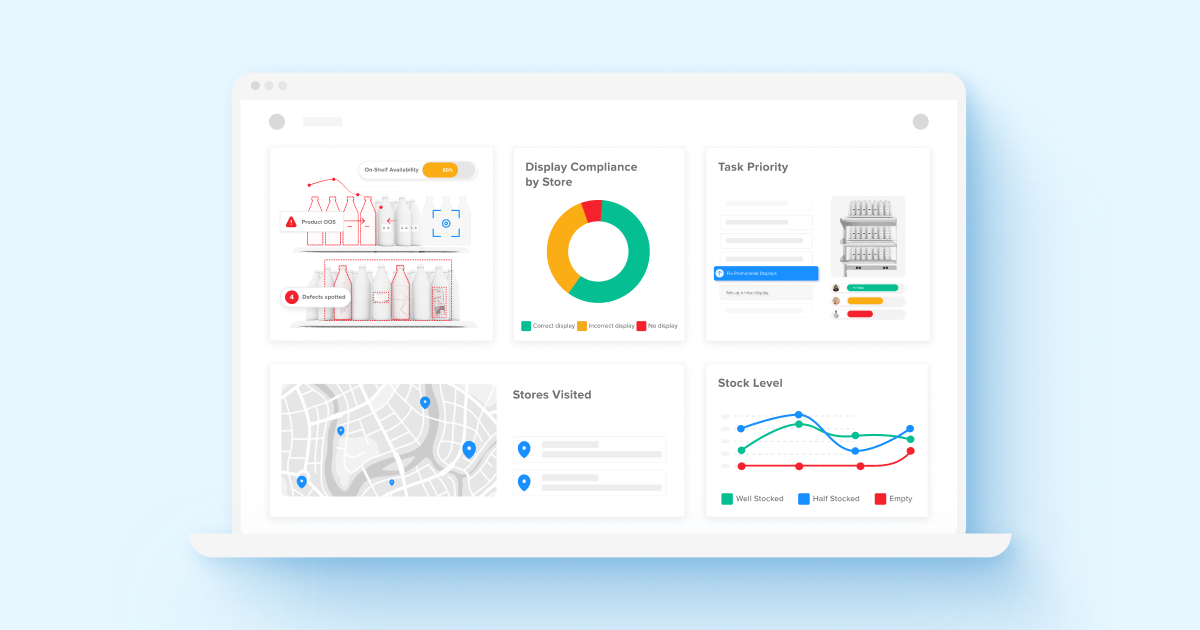
Display compliance is a critical part of retail merchandising. Even when displays are set up, they are not always executed correctly. Missing components, incorrect products, or competing items placed within your display can confuse shoppers.
Why it matters: Consistency is key to reinforcing brand messaging across locations.
Impact: Reduced promotional effectiveness and weaker brand awareness.
How to Avoid Merchandising Drawbacks
The issue is not that merchandising issues exist. It is how quickly you can detect and resolve them.
Without visibility into store-level conditions, these retail execution issues can persist for days or weeks, impacting sales the entire time.
With near real-time insight into store conditions, teams can:
-
Identify which locations are affected
-
Understand the severity of merchandising issues
-
Take action before problems impact more customers
While it may not be possible to eliminate merchandising issues entirely, improving retail visibility allows teams to respond faster and reduce their impact.
Standing Out In-Store
As shelf space becomes more competitive, strong in-store merchandising execution is more important than ever.
Shelves are increasingly crowded, promotions are not always executed as planned, and brands are competing for limited attention.
To stand out, brands must:
-
Maintain strong shelf health and product availability
-
Ensure displays are visible and compliant
-
Adjust product placement and merchandising strategy based on shopper behavior
Combining retail execution with shopper insights allows brands to create more effective merchandising strategies and improve in-store performance.
At Wiser Solutions, we focus on helping brands and retailers move beyond assumptions by providing visibility into real-world store conditions. When teams can see how products are actually displayed and experienced by shoppers, they can make faster, more informed decisions that protect both sales and brand perception.
Closing Thoughts
Merchandising issues are common across retail environments, but they do not have to define performance.
The brands that succeed are the ones that identify problems early, act quickly, and continuously improve how their products show up in-store. With stronger retail execution and better visibility, merchandising becomes a competitive advantage rather than a risk.
FAQs
Common merchandising issues include out-of-stocks, inconsistent restocking, missing or conflicting signage, broken displays, and display compliance problems.
They reduce product visibility, create poor in-store experiences, and limit product availability, all of which can lead to lost sales.
Display compliance refers to ensuring products, signage, and promotional setups are executed correctly and consistently across stores.
Retail visibility helps teams identify merchandising issues quickly, improving response time and reducing the impact on sales and brand perception.
By monitoring store conditions, using real-time insights, and adjusting restocking, placement, and merchandising strategies based on actual performance.